

South Africa’s Untapped Concentrated Solar Power Opportunity
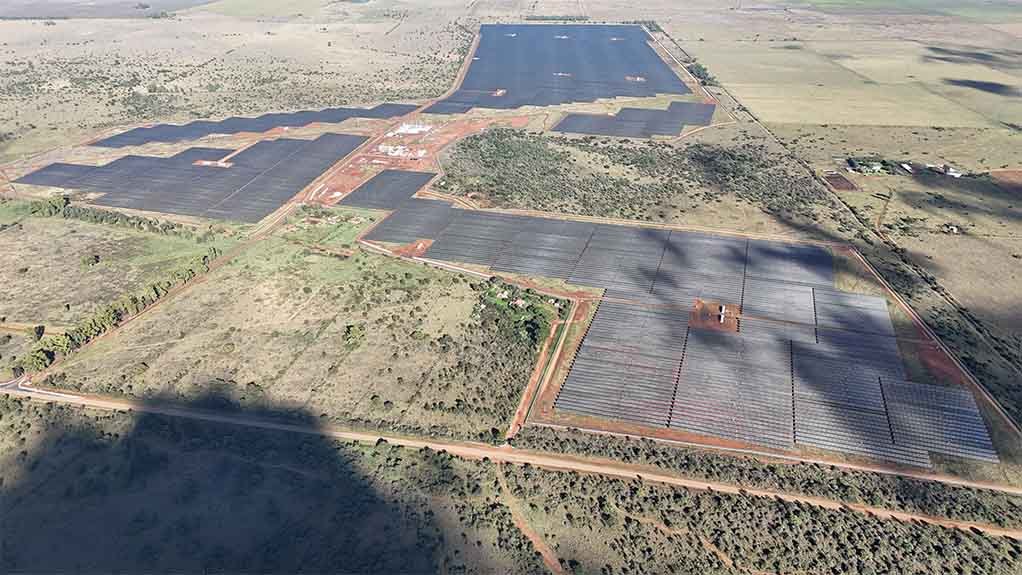
South Africa’s coal-fired power stations are approaching retirement, creating a major need to replace electricity generation over the next two decades. Coal currently supplies around 74% of the country’s electricity, yet one technology that could help fill the gap remains largely overlooked: concentrating solar power (CSP).
South Africa’s combination of abundant sunlight, dry conditions and low cloud cover makes it particularly well suited to CSP. Unlike conventional photovoltaic (PV) solar panels, CSP can store energy as heat and continue producing electricity after sunset.
How concentrating solar power works
There are two main ways of generating electricity from sunlight.
Photovoltaic solar panels convert sunlight directly into electricity. Concentrating solar power plants, by contrast, use mirrors to focus sunlight and generate intense heat. That heat produces steam, which drives a turbine to generate electricity.
CSP depends on direct normal irradiance (DNI) — sunlight that travels directly from the sun rather than being scattered by clouds, dust or moisture.
South Africa has some of the highest levels of direct solar radiation in the world, second only to Chile’s Atacama Desert. Its dry climate and clear skies provide favourable conditions for large-scale CSP development.
A technology South Africa has already demonstrated
South Africa previously had plans for further CSP development, but these were gradually scaled back. No new projects have been approved since 2014.
The country does, however, already have several privately developed CSP plants established through its renewable energy programme. Together, these facilities generate around 600MW, enough to supply approximately 350,000 to 400,000 average three-bedroom homes annually.
Research conducted by engineers at Stellenbosch University has examined how CSP could integrate with South Africa’s electricity grid, as well as the costs involved in building and operating the technology.
One argument is that energy planning has placed too much emphasis on the cost of generating electricity during daylight hours rather than the cost of delivering reliable electricity when it is needed.
The value of electricity after sunset
Conventional solar PV is relatively inexpensive during daylight hours. However, solar panels stop generating electricity once the sun goes down, precisely when household electricity demand often increases.
This ability to generate electricity when required is known as dispatchability.
CSP addresses this challenge by storing solar energy as heat rather than electricity.
During the day, mirrors concentrate sunlight to heat molten salt to temperatures of around 565°C. The hot salt is stored in insulated tanks and can later be used to produce steam and drive a turbine after sunset.
Modern CSP plants can store sufficient thermal energy to continue generating electricity for 12 to 20 hours, while some systems can operate for much of the day under favourable conditions.
Thermal storage versus batteries
Energy storage is a critical consideration when comparing renewable technologies.
Batteries are effective for storing electricity over several hours, but the cost can increase significantly when they are required to provide power throughout the night.
Thermal energy storage can offer a more cost-effective option for long-duration storage. By storing heat directly, CSP can continue supplying electricity after solar production has stopped.
This means comparing CSP solely with the daytime generation cost of PV solar does not capture the full value of dispatchable renewable electricity.
An opportunity for local manufacturing
CSP could also provide opportunities for South African manufacturing.
A large portion of the cost of conventional photovoltaic systems is concentrated in the solar cells, which are predominantly imported, with local production often focused on assembly.
CSP plants, on the other hand, rely heavily on concrete, steel and glass — materials that South African industries already produce.
As much as 60% of the components required for a CSP plant could potentially be sourced from South African manufacturers, creating opportunities across engineering, fabrication and industrial supply chains.
South Africa has already demonstrated expertise in CSP technology. The Stellio heliostat, an advanced mirror system designed for efficient and cost-effective solar concentration, was developed locally and designed with local manufacturing in mind. The technology has subsequently been deployed at scale in China.
What South Africa could do next
Future national energy planning could benefit from comparing technologies based on the cost of electricity when it is delivered to consumers, rather than simply the cost at the point where it is generated.
Government institutions, including the Department of Electricity and Energy and the Council for Scientific and Industrial Research, have the modelling capabilities needed to evaluate these different scenarios.
South Africa could also develop a dedicated strategy for rebuilding its CSP industry.
Government departments and development finance institutions could encourage future CSP projects to source more components locally, including mirrors, storage tanks, receivers and heliostat structures.
Research from Stellenbosch University’s Solar Thermal Energy Research Group suggests that South Africa’s electricity grid could accommodate between 6GW and 10GW of CSP capacity.
Depending on how the plants are operated, this could provide enough electricity to supply roughly 3.5 million to 6.5 million average three-bedroom homes over a year.
Greater local manufacturing could potentially reduce costs further and support additional deployment.
CSP could also have applications beyond electricity generation. Smaller-scale thermal systems could potentially replace diesel or electric boilers used by industries that require large amounts of heat for manufacturing processes.
A technology worth reconsidering
South Africa has the solar resources, industrial capabilities and technical expertise needed to expand concentrating solar power.
The challenge is developing a coordinated strategy that combines energy planning, investment, procurement and local manufacturing.
As the country’s coal fleet retires and demand for reliable electricity continues, CSP offers an opportunity to combine renewable generation, long-duration thermal storage and local industrial development.
Rather than viewing concentrating solar power simply as another renewable technology, South Africa could consider its ability to generate electricity after sunset and support local manufacturing as part of a broader energy-security strategy.
About The Author