
Botswana and Zambia Explore Joint Mining Equipment Manufacturing Hub
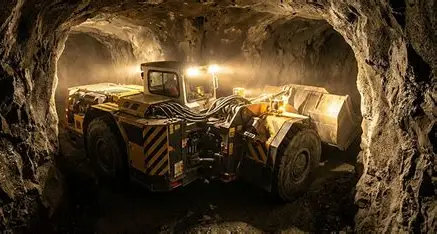
Botswana and Zambia are exploring plans to establish a jointly owned mining equipment manufacturing hub aimed at reducing import dependence, strengthening regional supply chains and promoting mining-led industrialisation.
Botswana’s Minister of Minerals and Energy, Bogolo Kenewendo, announced the proposal while addressing the Zambia Mining and Investment Insaka 2026 in Lusaka, an event officiated by Zambian President Hakainde Hichilema.
Kenewendo attended on behalf of Botswana’s President, Duma Boko, who had been invited to speak but was unable to attend due to other commitments.
She highlighted the opportunity for the two countries to leverage their established mining industries to develop local manufacturing capacity and reduce their reliance on imported equipment, technologies and mining supplies.
If implemented, the proposed hub could enable Botswana and Zambia to manufacture or assemble mining equipment for their domestic markets, with the potential to supply other countries across the Southern African Development Community (SADC).
Feasibility Studies Underway
The initiative remains at the conceptual stage, with feasibility studies underway to assess its commercial viability and long-term sustainability.
If the project proceeds, it could create opportunities for local manufacturers, engineering firms and suppliers while supporting technology transfer, technical skills development and cross-border industrial cooperation.
Developing regional manufacturing capacity could also help retain a greater share of mining-related expenditure within Southern Africa, creating opportunities for businesses to participate more directly in the mining value chain.
Strengthening Regional Mining Supply Chains
The proposal reflects broader efforts across Africa to move beyond mineral extraction by expanding local value addition, engineering capabilities and industrial production.
For Botswana and Zambia, a joint manufacturing hub could provide a platform for sharing technical expertise, developing regional supplier networks and increasing the participation of domestic businesses in the mining sector.
The initiative could also create opportunities for small and medium-sized enterprises involved in equipment components, maintenance, fabrication and related engineering services, subject to the project’s eventual scope and investment requirements.
Beyond the two countries, a successful manufacturing hub could strengthen SADC’s industrial capacity and position the region as a potential supplier of mining equipment and related technologies.
While the proposal is still being assessed, it signals a potential step towards greater regional cooperation and a more integrated mining supply chain in Southern Africa. Its eventual impact will depend on the findings of the feasibility studies, investment commitments and the ability to develop competitive manufacturing operations.
About The Author