
DRC Launches Mining Investment Agency as It Pushes to Diversify Mineral Partnerships
DRC Launches Mining Investment Agency as It Pushes to Diversify Mineral Partnerships
The Democratic Republic of the Congo (DRC) is establishing a centralised mining investment agency as the government seeks to attract new investors, streamline approvals and broaden the range of international partners involved in the country’s mineral sector.
The new agency is expected to provide investors with a single point of access for key processes, including company registration, licensing, taxation and regulatory compliance. By bringing these functions together, the government aims to reduce administrative delays and make it easier for companies to navigate the country’s mining investment framework.
The initiative forms part of a broader effort by the DRC to reform the management of its mineral resources and attract investment beyond its traditional partnerships.
Critical minerals remain at the centre of the strategy
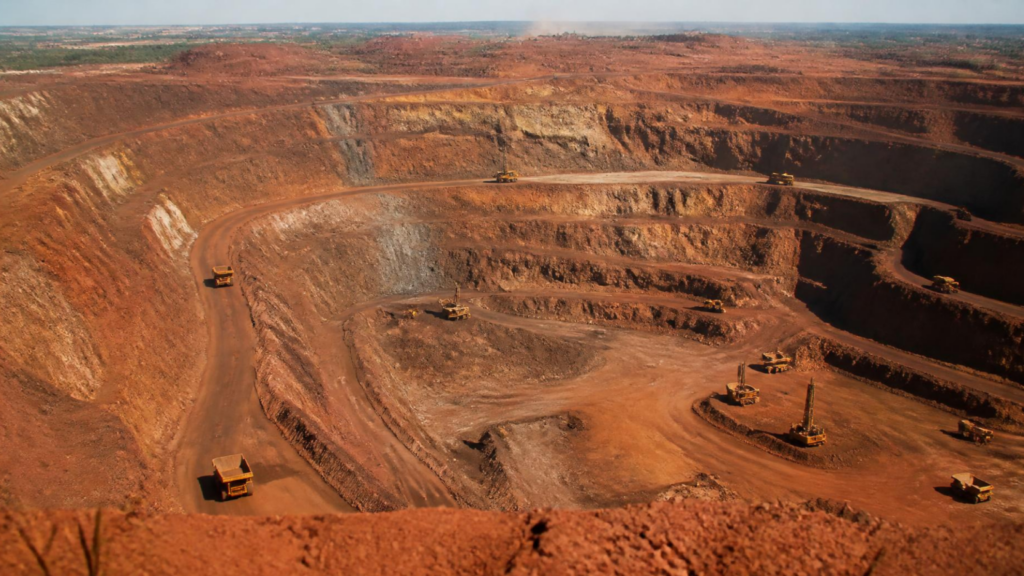
Mining is central to the DRC economy, with copper and cobalt among the country’s most important mineral resources.
The country is also regarded as having significant untapped geological potential. According to figures from the DRC Ministry of Mines, around 90% of the country’s mineral resources remain untapped or underexplored.
That potential has placed the DRC at the centre of global competition for critical minerals needed for industries ranging from energy and electric vehicles to electronics and advanced manufacturing.
Copper is increasingly important to global energy infrastructure, while cobalt remains a key material in several battery and industrial applications.
The government is therefore seeking to turn its substantial mineral endowment into greater investment, processing capacity and economic development while increasing oversight of how those resources are developed.
A broader network of international partnerships
The investment agency comes as Kinshasa seeks to diversify its relationships with major economic powers.
In December 2025, the DRC and the United States signed a Strategic Partnership Agreement aimed at strengthening economic cooperation and encouraging investment, including in the country’s resource industries.
The DRC has also established mineral and investment partnerships with China and the European Union, giving the country a wider group of potential partners as it develops its mining sector.
The new investment agency is expected to be open to investors from the US, China, the EU and other markets.
Rather than limiting investment opportunities to a particular group of countries, the government is positioning the agency as a central platform through which international companies can access the DRC’s mining sector.
Streamlining the investment process
For mining companies, one of the main attractions of the new structure could be a simpler route through the regulatory system.
Mining projects often require multiple approvals, licences and regulatory processes before operations can begin. Delays at different stages can increase project costs and make investment decisions more difficult.
By consolidating registration, licensing, taxation and compliance functions, the DRC government wants to reduce duplication and shorten the time required to move projects through the approval process.
The effectiveness of the agency will ultimately depend on how these reforms are implemented and whether investors experience measurable improvements in transparency, predictability and processing times.
Greater oversight of the country’s mineral wealth
The new agency is being established alongside other measures aimed at strengthening government oversight of the DRC’s mineral resources.
In recent months, the government has introduced a series of export-control measures and worked towards establishing a centralised database to improve the mapping and management of the country’s mineral resources.
Together, these initiatives point to a broader shift in the way Kinshasa is seeking to manage its mining industry.
The objective is not only to attract more investment, but also to improve visibility over the country’s mineral wealth, strengthen regulatory control and create a clearer framework for companies operating in the sector.
From mineral wealth to investment and value creation
The DRC’s challenge is to translate its vast mineral resources into broader economic benefits.
While the country is one of the world’s major sources of cobalt and an important copper producer, increasing investment in exploration, processing and related infrastructure could create opportunities further along the mineral value chain.
A more predictable investment environment could also encourage companies to consider projects that extend beyond extraction, including mineral processing, refining, logistics and supporting infrastructure.
For international investors, the creation of a dedicated mining investment agency could therefore provide a clearer entry point into one of Africa’s most resource-rich markets.
For the DRC government, however, attracting capital is only one part of the equation. The longer-term objective is to balance investment with stronger oversight, transparent regulation and greater economic value from the country’s mineral resources.
A new phase for DRC mining investment
The establishment of the agency signals a more coordinated approach to mining investment in the DRC.
By bringing investment-related processes together and expanding engagement with partners across the US, China and Europe, the government is seeking to make the country more accessible to international mining capital while maintaining greater control over its strategic mineral resources.
The success of the initiative will depend on whether it can deliver faster approvals, clearer regulatory processes and greater certainty for investors.
With much of the DRC’s mineral potential still underexplored, the country has significant room to expand its mining sector. The next challenge will be turning that geological potential into responsible investment, productive capacity and broader economic value for the country.
About The Author